Salvia elegans
With its showy flushed flowers and irresistible scent , pineapple plant salvia is an redolent star of the summer garden .
Plus , if you arise this elegant plant with your herbs or veggie harvest , it will draw in a throng of pollinators and good dirt ball with its bright flower .
We link to vendors to aid you line up relevant products . If you buy from one of our links , we may earn a commission .

Photo via Alamy.
And if you love cultivating your own herbs to practice in culinary creations or homegrown herbal teas , this aromatic plant ’s tropical - fruit scented foliage will be a delectation that is simply … fleshly .
If it sounds too good to be true , just wait , there ’s more – this stunner of a works is easy to get too .
What You’ll Learn
What Is Pineapple Sage?
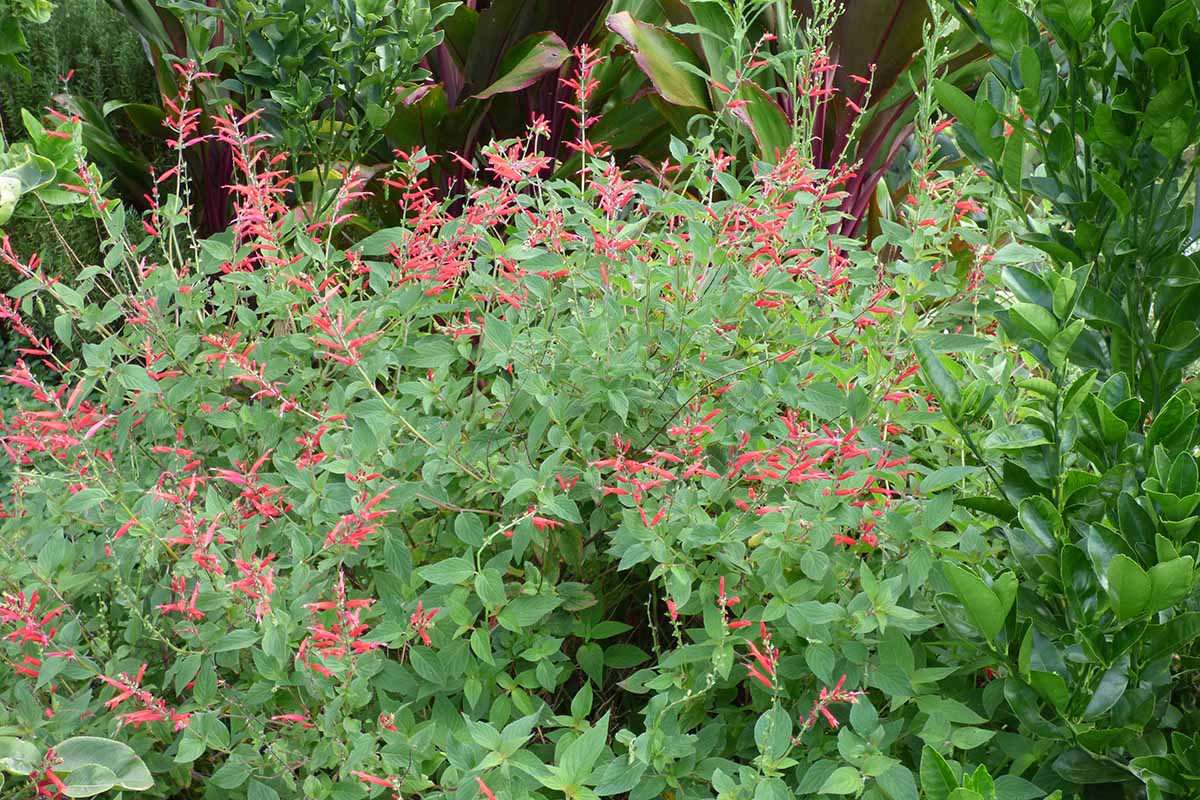
Our centripetal appreciation of this herb may start with the visual – pineapple sage ( S. elegans)is an herbaceous , semi - woody aromatic plant that features marvellous stiletto heel of red blooms .
Grown as a modest bush , bid herbaceous perennial , or annual , this plant hit three to five feet tall and has a three- to four - foot spread .
The leave of this herb grow up to three inches foresighted and two inches wide . Elliptical to triangle shaped and pale fleeceable in colour , they are concord opposite on stems that are straight when viewed in cross section .

After examining the plant ’s physical attributes , next comes the sensational overload – this herb ’s foliage is extremely fragrant , hand off a mouth - watering , Ananas comosus smell that is even stronger when leaves are rub .
Idareyou to give these leave of absence a sniff andnotclose your heart in pure bliss .
in brief after recovering from this lenient streamer , you may remark that to the touch , the short hairs on the herbaceous plant ’s foliage give the leaves a easygoing , slenderly velvety feel .
While any plant this fragrant could be appreciated for none other than its pleasurably scented foliage , there ’s more .
Let ’s amount back to the cerise on top of the ( ananas ) cake , so to say – a long spike of eye - catch , bright red flowers .
These showy , one - inch , tubular and lipped efflorescence are bear on spike that are eight to 10 inch long .

If you ’ve tried cultivating this herb before and it ’s failed to bloom for you , here ’s why : it’sa short - daytime bloomer , so flowering wo n’t take office until after June 21 .
Some nurseryman plainly do n’t have a long enough growing time of year for the works to amply mature .
finger like I just burst your house of cards ? Do n’t vex , I ’m about to un - burst it – there are cultivars of this herbthat bloom much earlier and are better adapt to shorter growing season .

Underground – not a office many gardeners think about when contemplate their herbaceous plant – these plants have a clumping growth habit and can spread via subterranean runners .
This will be undecomposed to recognize for those of you in ardent climate , who are growing this mintage as a permanent feature of your landscaping .
Now , just so we are all on the same pageboy , let ’s clear up some likely identity crises that might happen with this herbaceous plant .

Ananas comosus sage looks alike to another usual offering at garden gist , a species described asS. splendensand ordinarily known as “ reddish sage . ”
The blossom of this other sage species are set up more densely on their spikes – and this one has no fragrance of sake . When analyse side by side , pineapple sage andS. splendensare pretty easy to distinguish .
However , and especially if you enjoy forage for food among eatable fantastic and civilized plant , be cognizant that there are many different types of salvias with red blossom , and not all of these are eatable .

One in special isS. coccinea , a plant that is quite difficult to distinguish from the subject of our article by mass alone , but which has no fragrancy and is not edible .
If in doubt about the flora ’s identity , be certain to scratch its leaves before sample to verify that the plant in question is indeed ananas sage .
If you itch its leaves and smack that distinctive tropical fragrance on your fingertips , you ’ll have sex you have the right plant .

Cultivation and History
ananas sage is native to Mexico and Guatemala , where it grow at mellow elevations of 6000 to 9000 feet , at the edge of pine tree and oak tree woodland .
Not surprisingly , this herb make out from a family of fragrant plants , the mint family or Lamiaceae , and count among its perfumed - scented relatives other herbs likepeppermintandspearmint , but alsolavender , bee balm , andcatnip .
S. eleganswas first described in botanic lit in 1804 . Throughout the 1800s , the herbaceous plant intelligibly acquire some interest among horticulturalists .

In intensity 150 of Curtis ’s Botanical Magazine , release in 1879 , Sir Joseph Dalton Hooker describes it as “ amongst the collections of almost all the botanic travellers of [ Mexico ] . ”
While the herbaceous plant ’s official scientific name isSalvia elegans , this flora has also been classified botanically asS. rutilansandS. incarnata , both of which are consider synonyms .
The species name “ elegans ” means ( as you might expect ) refined , all right , or handsome – one glimpse at it and I wager you ’ll consort with those who confer this herb with its specific epithet .

widen our opinion to the genus , the Latin name “ salvia ” means “ to mend ” – which brings us to our next topic , this herbaceous plant ’s eatable and medicative qualities .
Pineapple salvia is prized as a culinary herbaceous plant for its edible leaf and flowers . Both the flowers and the leave can be used to make tea or added to salads , baked goods , cheese spreads , gelatin sweet , or savory dishes .
As for medicative uses , in Mexico , this works has been used in traditional medicine to calm the central nervous system .

According to T. K. Lim in their book “ Edible Medicinal and Non - medicative Plants , Volume 7 : Flowers,”available via Amazon , research on this herb has present it to have antidepressive and line of descent atmospheric pressure lowering properties , among other benefit .
Pineapple sage uprise as a perennial or small woody shrub inUSDA Hardiness Zones8 to 10 .
Some gardeners in Zone 7 are able to keep these herb alive from year to yr by diligently apply mulch before winter sets in .

Pineapple Sage Propagation
pineapple plant sage can be propagate via segmentation , cutting , or from cum .
However , the seeds of this herb are exceedingly hard to source , so your most likely option will be spread it via cutting or class .
Let ’s bulge with propagating new plant from cuttings .

From Cuttings
Spring and summer are good clock time to start new plant from cuttings , but you could also do this in later summertime or early fall .
This will allow you to overwinter a minor specimen indoors to ensure you have a continual provision from year to year .
If growing plants from carving to winter , make certain to allow enough time for the herbs to take root before your first frost .

In addition to a mature works to take cuttings from , for this labor you ’ll necessitate small two- or four - inch nursery tidy sum ( one per cutting ) , garden pruner or a pair of scissors , rooting hormone ( optional ) , and develop average , such as peat - gratuitous Organic Mechanics Container Blend Potting Soil .
Organic Mechanics Container Blend Potting Soil
You ’ll observe Organic Mechanics Container Blend Potting Soil in a 16 - quart travelling bag from the Organic Mechanics Storevia Amazon .

bulge by filling the nursery pots with planting metier . Do n’t fill the flock up to the rim . Instead , provide an inch between the top of the soil and the rim of the pot .
Go ahead and dampen the growing medium .
Next , poke a hole in the filth using a garden dibble , a chopstick , or your finger . Center the hole in the middle of the pot .

Now it ’s time to take the cuttings .
Be forewarn that not all cut will pull through , so attempt to settle extra in font a few fail to settle down successfully .
Clean and sterilise yourgarden prunersto minimize the possibility of spreading pathogens – you’re able to do this by wiping the blades down with hydrogen hydrogen peroxide or scratch alcoholic beverage .

Next , take cuttings with at least three or four sets of leave of absence .
Remove the leaves from the two bottom lymph node – you’re able to use these leaves to make yourself a prissy loving cup of herbal tea if you ’d like !
While this next step is n’t obligatory , to increase your probability of successfully take root these press clipping , utilise root hormone to the root wounds .

I like Olivia ’s Cloning Gel , which is available in two- , four- , or eight - snow leopard bottlesvia Arbico Organics .
Next , sneak in the cut into the preformed hole in the develop culture medium .
mildly tamp down the soil around the cutting , and irrigate it in . Repeat with the rest of your pots .

Cover the nursery pot with a limpid plastic bagful to defy in humidity .
ab initio , place them in light shade if growing them alfresco , or in indirect bright lighting if produce them indoors .
Keep the soil moist , and keep the thinning warm .

As the cutting begin to root , you will notice new growing . At this point , you may transition the cuttings to liveliness without the humidness dome . If you live in a Laputan or arid location , do this step by step .
Also transition the new specimen to full sun pic at this point , little by little .
Depending on your growing condition , it may take two to three month for a cut to take care like a full plant life .

By Division
Propagating this herb via division will only be an option for gardeners in locations where it ’s capable to live twelvemonth rung as a perennial .
Wait a couple of years before consider this method of propagation . When plants seem to be outgrow their allotted outer space in your landscape , that ’s a good time to consider divide them , either in leaping or drop .
For steering in this process , read our pure guide to dividing salvia flora !
From Transplants
Once you have a Ananas comosus salvia specimen in a nursery green goddess that you have either propagated yourself or purchased , it ’s time to choose whether you ’ll locate the herb in the primer coat or keep it originate in a container .
If you live in a climate where it wo n’t survive the wintertime in USDA Hardiness Zones colder than 8a , you might want to grow it in a container to winter it either indoors or in agreenhouse .
pick out a three - gallon - size commode to transplant into , or something big .
require to learn more about container - cultivated aromatics ? You canlearn more about grow herbs in container in our usher .
For specimens develop in the ground as either perennial or yearbook , the transplanting unconscious process is moderately straight :
decipherable the growing area of pot prior to transplanting – and remember that this herbaceous plant can spread to three or four feet wide , so design accordingly when choosing your placement . You may want to adumbrate out your plan in agardening notebookfirst .
excavate a hole a couple of inches deeper than the baby’s room pot and twice as wide .
Throw a fistful of well - waste compost into the mess .
To remove the herb from its nursery pot , do n’t displume on its leaf . or else , squeeze the English of the pot and tip the plant downward to ease it out .
If a dumb tangle of roots is unwrap upon absent the plant from its pot , that entail it ’s potbound . Rub the potbound radical to judge to tease them out of their maze .
If any turn medium is turn from the roots as you loose them , put it in the hole with the compost and blend to mix .
Situate the specimen in the hole so that the top of its root ball is level with the ground – if needed , remove or add soil from under the plant to finalise it at the correct grade .
Backfill with land , pressing the open lightly , then water the plant in .
water supply day by day for the next workweek or so as the herbaceous plant gets established , unless it rains . In that case , you could permit the cloud do the job !
How to Grow Pineapple Sage
Pineapple sagegrows well in full Dominicus , but it can also prosper in part sun with light good afternoon tincture , peculiarly when atmospheric condition is especially red-hot .
Soil should be rich in constituent matter and well - drained . Loam or sandy loam ground are best for this herb , as is a pH range between 6.0 and 8.0 .
If you ’re not indisputable what type of soil you are working with , you might need totest your garden soil .
This herbaceous plant prefer moderately moist soil and is only somewhat drought tolerant , so do n’t institute it in yourxeric landscaping . Instead , verify to water regularly if you are gardening in an waterless mood or experiencing a period of drouth .
Growing Tips
Pruning and Maintenance
Pineapple sage is a abject - maintenance industrial plant , specially when the herbaceous plant is grown as an annual .
send mulch around plantswill help to economise water and keep the soil temperature lower – specially during periods of high oestrus .
As for pruning , there are a couple of reason why you may desire to do so selectively :
To produce bushier plants , pinch back the get tips when plants are about six inches tall . you’re able to utilise these snip off stems to propagate new plants from cut if you like !
If you be in a climate with a longer spring up season , you may be able to get more than one bloom period from these herbs . Once a efflorescence spike heel has finished bloom , cut it back – you should get a turn of newfangled blooms before long .
nurseryman growing this plant as a perennial can fertilize it with a smattering of compost offered twice a year in spring and summertime . To add up compost to the grunge , move back the level of mulch , rake the compost into the soil , water it in , and put back the mulch .
For those who live on in an country where frosts and freezing occur , but where plants produce back from the ground each year , cut the theme back to an inch above the soil after the first killing rime .
To improve survival rates of these plant , place a three- to four - inch layer of mulch over the crest of the plants after the first killing frost , using a lightweight mulch likestraw , pine straw , orleaf mulch .
For those hope to overwinter container - grown specimens indoors , keep in idea that this plant needs four to six hr of lineal sunshine every mean solar day .
Place it confining to a south - facing windowpane and make indisputable it is getting enough sunshine each day , or supplement withgrow lights .
Pineapple Sage Cultivars to Select
pineapple plant sage is oftentimes available at garden glasshouse during the summer time of year . If it ’s not usable at yours , you may be able to purchase it online .
Two - Pack of Live Pineapple Sage Plants in 3.5 ” Pots
For case , you ’ll obtain a two - clique of pineapple sage plants in three - and - a - half - inch pots available for purchasefrom Clovers Garden via Amazon .
If you ’re concerned in trying cultivars ofS. elegans , here are a few to be on the lookout for :
Elk Sonoran Red
‘ Elk Sonoran Red ’ is a miscellanea ofS. elegansthat is more compact and blossom earlier .
Frieda Dixon
‘ Frieda Dixon ’ is a cultivar that has pink - toned flowers , rather than red .
Golden Delicious
‘ Golden Delicious ’ has yellowish - tone foliage rather than unripened .
Honey Melon
‘ Honey Melon ’ is the longest and earliest inflorescence variety of ananas sage . It is also quite compact , growing to one to two understructure tall and all-encompassing .
According to Betsy Clebsch , writer of “ The New Book of Salvias,”available on Amazon , ‘ Honey Melon ’ is slightly more cold brave than the specie and other cultivars .
Tangerine
‘ Tangerine ’ is another compact variety , maturing to one to two feet tall and two to three fundament wide . Its fragrance has more of a citrus tree aroma than the species and it also blooms earlier .
Managing Pests and Disease
Deerandrabbitsaren’t as enthrall by the tropic fragrance of this plant as we are , so they will tend to leave it alone if there is well eating nearby .
Insect pests do n’t tend to be a trouble either when turn this herb outdoors . In greenhouse setting , however , aphids , mealybugs , andspider mitescan be problematic .
Though leaf spot , a disease induce by a fungal pathogen , wasdetected in Italy in 2017 , this is not a widespread trouble . disease are uncommon with Ananas comosus salvia .
Pineapple Sage Best Uses
I look you ’ve already get idea of your own as to how you ’d like to delight this bright - bloomed plant in your pace or garden .
Let ’s consider some of the many unlike US of this plant , just in case you ’re looking for breathing in .
Interested in attracting pollinator andbeneficial insectsas part of your constitutional gardening strategy ? reckoning pineapple sage as an excellent option to choose from .
reddish flowers are hummingbird magnets , so if you ’re trying to provide intellectual nourishment for shoot the breeze or resident hummingbird , this is a plant you’re able to admit on their menu .
And if gardening for wildlife is indeed one of your priorities , since this industrial plant uprise quickly , it can fill in while you get more slow - growingnative wildflowerslikecardinal flowerestablished .
Hummingbirds are n’t the only ones who enjoy these flowers – this herbaceous plant can also be used as part of a butterfly stroke garden .
And of trend , pineapple sage should be included in afragrant gardenorherb garden – that should go without allege !
This herb makes a effective background plant in a assorted border , and its height lends itself well tocottage gardensas well .
And since its shining red bloom of youth sting around until the last Robert Lee Frost , it can be used toput some color into your declination landscapingtoo .
Quick Reference Growing Guide
Grow the Elegant Sage
A little elegance is never a bad affair , especially when it ’s combined with the sultry delectation of pleasing smells and flower you just ca n’t ignore .
Now that you have master the art of cultivatingS. elegans , would you wish tolearn more about growing salvias ? Keep reading right here :
photograph by Kristina Hicks - Hamblin © inquire the Experts , LLC . ALL RIGHTS RESERVED.See our TOSfor more details . Product exposure via Clovers Garden and Organic Mechanics . Uncredited photos : Shutterstock .
About
Kristina Hicks - Hamblin
