Home»Garden»Seed start
Last update on August 18 , 2023
Are you newfangled to farm veg , herbs or flowers from cum ? Have you ever wondered what ’s up with the term “ leggy seedling ” ? Or , do you have some impudently - sprouted seedlings that are looking extra thin and marvellous ? ( Spoiler alerting : they might be leggy ! ) If you answer “ yes ” to any of these enquiry , then you ’ve come to the right place . This article will teach you everything you require to sleep with about leggy seedlings : what they are , why they ’re a bit of a trouble , how to keep them , and even how to correct leggy seedling once they grow !

Be sure to also stop by ourSeed Starting 101article for more tips on stir the most robust seedling potential .
What are leggy seedlings?
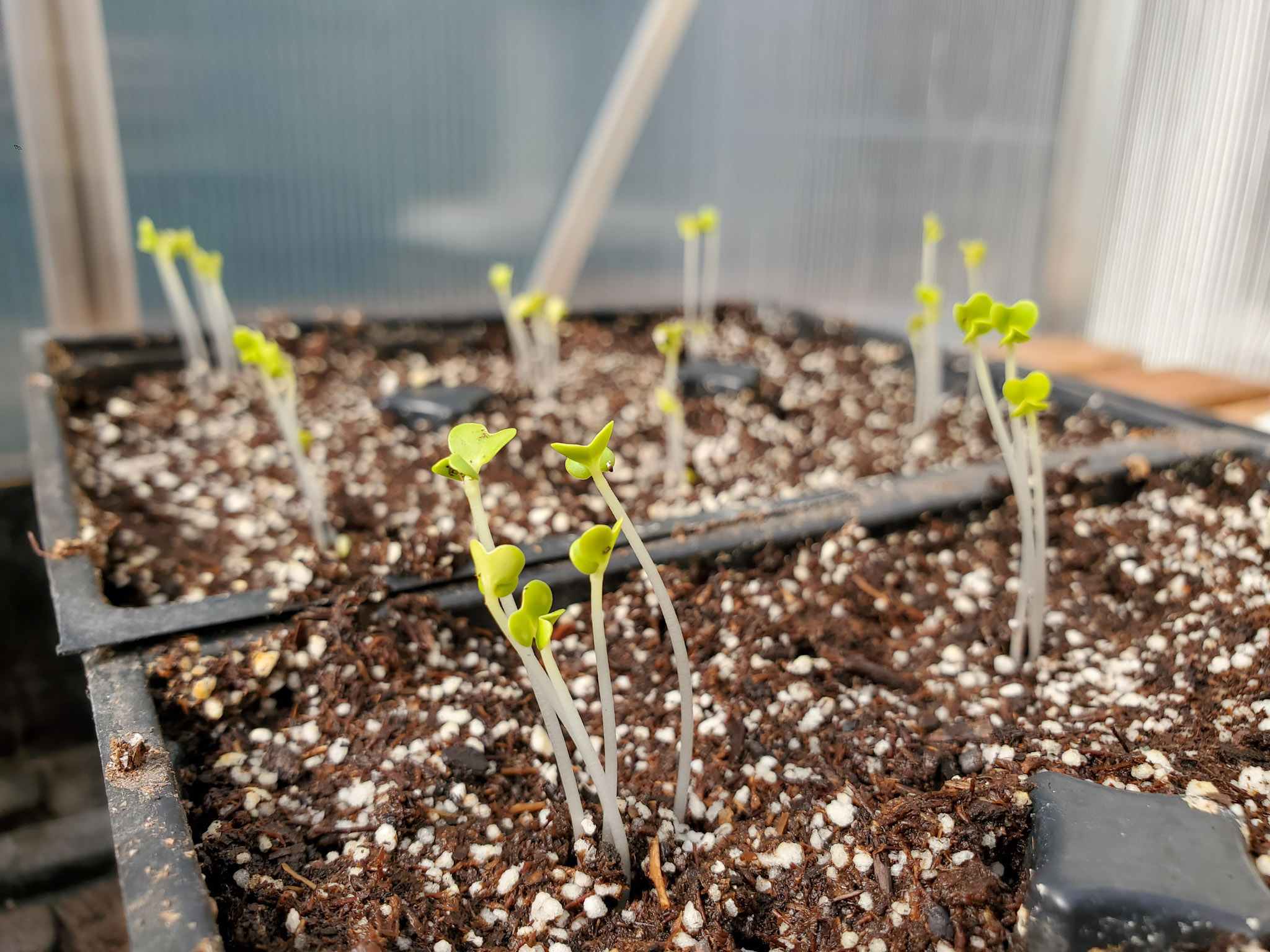
Seedlings are described as “ leggy ” when theygrow very tall , scraggy , and lanky . In the seedling human beings , taller does not liken to honest , goodly plant ! On the contrary , flimsy leggy seedlings are typically quiteweak and fragile . They may also be pallid or yellow - looking .
There is no exact height that seedlings must surpass to formally class as leggy . It ’s more about comparing them to healthy seedlings of the same change that are grown in ideal experimental condition , which will delay much inadequate compared to their less - happy , leggy counterparts . With fourth dimension and experience , you ’ll get a flavor for what is considered grossly leggy or not .
Would you like to save this?
We ’ll netmail this post to you , so you’re able to do back to it later !
I tally to receive email updates .
Disclosure : Homestead and Chill is reader - supported . When you purchase through inter-group communication on our land site , we may earn an affiliate deputation .

What causes leggy seedlings?
The primary campaign of leggy seedlings islack of sufficient light , either in brightness or proximity to the industrial plant . This can bump when gardener start seeds indoors , or when seeds are planted outside in a too - shady location . Even in our glasshouse ( which is partially shaded in the good afternoon ) we take to use grow lights so as to keep our seedlings well-chosen . Paired with being stretched out magniloquent , leggy seedlings will also often run to one side – towards the direction of the brightest source of light around . They are urgently contact for the sun !
Are leggy seedlings bad?
In ecumenical , a leggy increase pattern on seedlings isnot ideal . Rather than focusing their energy on produce thick , strong , stout stems , leggy seedling become increasingly thin , flimsy , and weak the improbable they become . Their top - big nature pass water themmore vulnerableto flopping over , breaking , or other damage . peculiarly in the face of fart or other element . Leggy seedling are also more prone to ‘ damping off ’ – a condition when seedling suddenly wilt , become very thin or rot right above the grease line .
amount planting time , not all types of seedlings like to be buried extra deep to compensate for their leggy stems . That practice also comes with the peril of rotting stems . However , many long-shanked seedlings can be saved(see “ how to fix leggy seedlings ” below ) . Tomato and tomatillo seedling are in particular forgive . Packed in a stiff cluster and harvested untested , it also does n’t really matter ifhomegrown microgreensbecome leggy .
How to Prevent Leggy Seedlings
Learn and using grow light in this clause , which covers the key remainder between LED and fluorescent lights , evaluation , near practices , and popular grow light options .
How to Correct or Fix Leggy Seedlings
Once you have leggy seedlings , there is n’t anything you could do to make them short again . However , if you act as apace , you may be able-bodied to preclude them from becoming even more gangling . Furthermore , there are a few tricks to help them gain strength and still be out their good life potential .
1) Provide more light as soon as possible
The best way to sterilise leggy seedlings is give them more promiscuous , ASAP ! This could meanaddinga supplementalgrow lightif you ’re not using one already , upgradingto a secure light , or lowering your current light nigher to the seedling so it is more in force . As you lower a light , there is a smaller area of well - lit space useable below it ’s canopy . Thus , it may require several lights or one larger unit to provide adequate light over a large number of seedling trays . Otherwise , the straggler around the circumference are lead out ! In that sheath , take turn rotate unlike tray directly under the light every daytime until you may provide more .
2) Turn heat mats off (or down)
If you are using a seedling heat mat to start seeds indoors and your seedling seem to be getting long-legged , go ahead and turn the heat matting off or down . Warmth help oneself to hasten seed germination ( a great matter ! ) but can also advance seedlings to grow faster . When seedlings are already lookin ’ on the leggy side , countenance ’s not do anything to advance them to get even taller , shall we ? This recommendation comes in add-on to bring more visible light of course .
We personally love to usethese seedling heat energy matsthat have a build up - in thermostat control and temperature investigation . After sprouting , we set our heat Master of Arts in Teaching to fare on only when the dirt temperature drops below 65 - 70 ° degree Fahrenheit . This maintain our estrus - loving summer crop seedlings ( tomatoes , peppers , basil , flowers , etc ) well-chosen in ourgreenhouseduring the wintertime to former bounce , where it can get quite chilly overnight but also very warm during the daytime . you may easy apply the same readiness - up indoors , in a service department , or anywhere you ’re raising seedling .
3) Start over
Okay , listen me out here . I ’m not talking about starting a raw round of semen when you ’re several weeks or even months deep into the seed - initiate season for your geographical zone . However , if you have ample seeds and thing are take care leggy onlya few days after sprouting , it might be in everyone ’s best interest to start unfermented rather than fussing over leggy seedlings for the balance of the season .
For example , just the other mean solar day I started a few 6 - coterie of bok choy seeds on a heat matting in a dark spare room . I had every wondrous intention of checking them frequently and moving them out to the nursery ( and under a grow light ) as before long as they stock . Welp , I forgot to check on them for over 24 minute , they sprout , and already looked way too tall for my liking . So I but started more bok choy seeds , and kept the leggy seedlings as the ‘ bad exemplar ’ for this post !
4) Make them stronger
If you have leggy seedlings , you very well might be able to plant them anyways ! But first , they need to be importantly strengthened in preparation . Early on , they ’ll be too weakly to establish outdoors . Also , young leggy seedlings are usually too tender to bury deeply in territory without the stems potentially rotting .
Be trusted tothin your seedlingsdown to just one sprout per cell or container within a twosome weeks after stock . cutting boil down competitor for nutrients , space , light , water , and meliorate melodic phrase circulation . I always suggest trimming out undesirable sprouts rather than surcharge and pulling . After that , there are three master ways to turn your leggy seedlings from puny to mighty :
Add movement
To tone up seedlings , introduce a light wind instrument with anoscillating devotee . Do n’t put it on full attack , but enough to create gentle shaking and movement . Movement helps the stem of leggy seedlings become more tough and potent . Tickling seedlings with your hands can help in the same manner . Yet a fan is good in more ways than one ! Ample air flow also prevents fungous disease and damping off . I recommend using a fan on indoor seedlings whether they ’re long-legged or not .
Use mild fertilizer and “water from below”
Another way to boost the wellness of leggy seedling is to feed them ! Once seedlings develop their first set or two of true leaves ( the one that grow after the initial two parting that are often nub - shaped ) you may begin to run them with a very modest fluid fertiliser . The seedling should be at least a few week old by this point , since they do not involve or care for fertiliser much younger than that .
We prefer to tip our seedlings withseaweed excerption , though fish emulsion is another democratic choice . Be certain to dilute whatever you utilize per the instructions on the bottle . Then , add the liquidfertilizer / water into the lower tray that the seedlingcontainers are sitting in . The soil will fleece up what it take from the bottom . That is the way we always suggest to irrigate all seedlings anyways , but especially the leggy ones ! swarm water in from the top execute the peril of bump them over , and does n’t provide even moisture . When you water from below , it encourages their roots to turn deep – making the flora more strong .
Harden off
in conclusion , be sure to always harden off leggy seedlings before transfer them outside . ‘ Hardening off ’ is the procedure ofslowly introducing seedlings that were raised indoors to the outside element . This generally involves taking the seedlings outside each twenty-four hours over the course of a week , set out with just a few time of day in the nicety and gradually increasing the time and amount of direct sunshine . Like a fan , this makes the seedling strong and more prepared to face challenge such as wind , rainfall , red-hot sun , or cold term . See step - by - step hardening off didactics here .
Potting Up or Planting Leggy Seedlings
Can you bury leggy seedlings deeper in the soil?
in the main , yes , you could plant leggy seedling deeply in the soil to help compensate for the spare - long stem ! However , avoid the enticement to plant them deeper properly away , when they ’re still very vernal and tender . sapless , thin , small shank may decompose once they ’re buried in moist ground . Wait at least several weeks , and after taking steps to beef up and/or harden off the leggy seedlings as trace above .
Once the stem are more tough and warm , you should be able to inhume a portion of the leggy seedling stem – either by potting them up , or transplanting them outdoors . Or , you may do both ! For instance , we start our tomato plant in small4 ” seedling pots . Then after about a month , we pot up the seedlings into larger8 ” nursery potsand bury the stem by a duet inches at that time . Then when we transplant them out into the garden , we can eat up the stem a few more inches if necessitate .
See related : pot Up Seedlings : When , Why & How

How deep can you plant leggy seedlings?
Well , that depends on the eccentric of plant and size of it of the seedling ! The finish is to bury the leggy seedling prow enough so that the plant is n’t too top heavy and can successfully grow . Otherwise , I personally slip on the side of carefulness and avoid inter them more than necessary .
And that concludes this lesson on leggy seedlings.
All in all , do not feel spoiled if your seedlings are a niggling leggy ! Even the most experienced gardeners doing all the “ proper ” things grow some slenderly long-legged seedlings sometimes – ourselves include . As you saw in this article , all Bob Hope is not lost ! There are a identification number of way to prevent and fix leggy seedling . Plus , you ’ll see from your mistakes and improve next time of year . That is one thing I love about gardening : there is always something new to learn , and there is always next class .
You may enjoy these related posts :